Farsin khronos
I’m a twenty-year-old Experimental musician using sound as a kind of diary. Each record reflects a specific period of my life, shaped by whatever emotions or ideas occupy me at the time. I try to translate those inner states into sound as faithfully as possible. My relationship with music began when I was ten years old, after my father gave me a piano. Since then, music has remained a constant presence in my life, something I've never stopped learning, practicing, or returning to. Beyond music, I'm also deeply drawn to writing and filmmaking. Whether with a cheap camera I received as a gift or simply my phone, I find myself documenting the world around me. In many ways, this website is where those different parts of my creative life come together.
THE CATALOGUE
Historia Morbi
zeitmessung
The Black Grouse
The House of Our God is a Tomb
Phlogiston
The Last Ephemeris
Songs from My Identical Twin ꖴѮꖴ
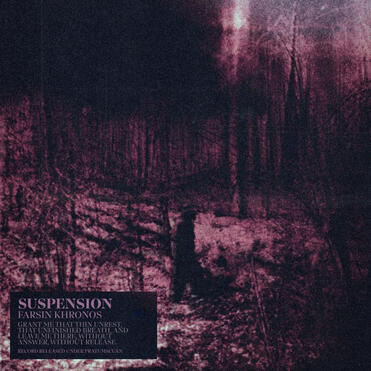
SUSPENSION
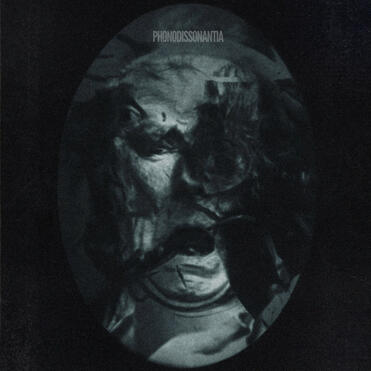
Phonodissonantia: Voice Study
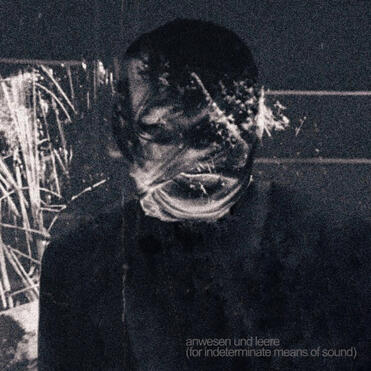
anwesen und leere
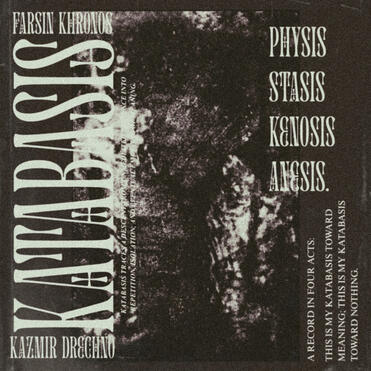
KATABASIS
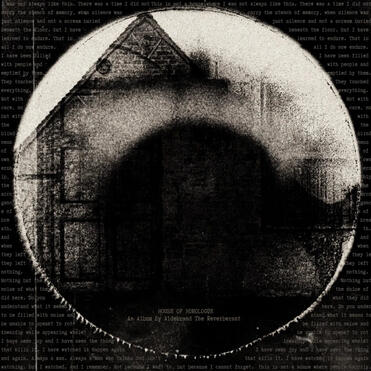
Høuse øf Hørøløgue
Malebolge
Songs to My Identical Twin ꖴѮꖴ
Rites for the Coiled One 🜏
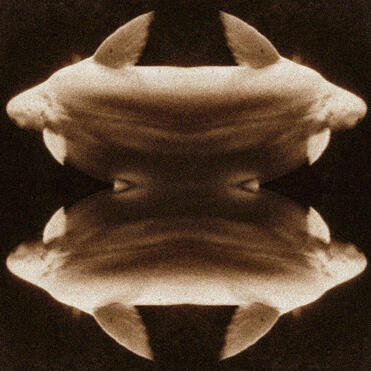
Do Fishes Dream of Dying Oceans?
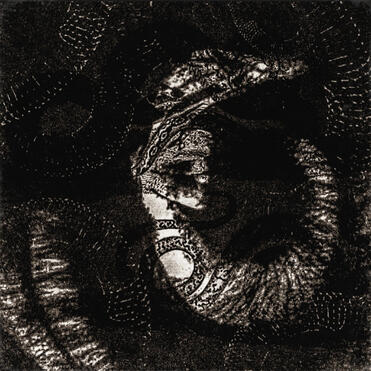
Lair of the Reticent Coil
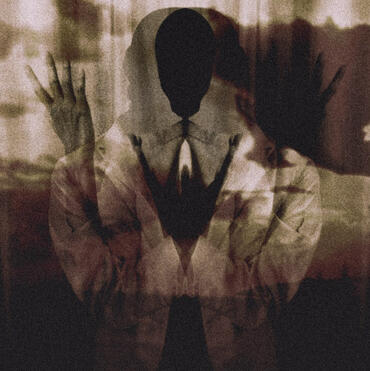
Toward Ultima Thule.
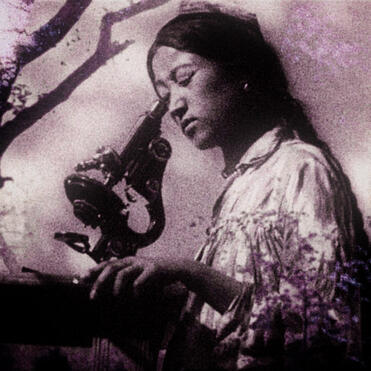
rosae mortem
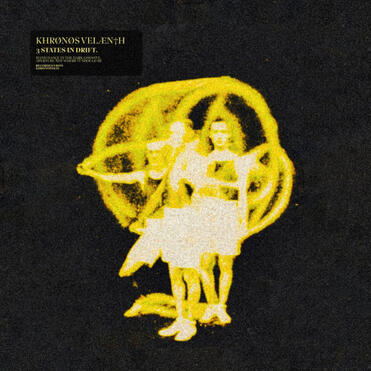
3 STATES IN DRIFT.
HASE CALIIIGO
suspension in two movements
dreams of a lesser eye
THE LIBRARY
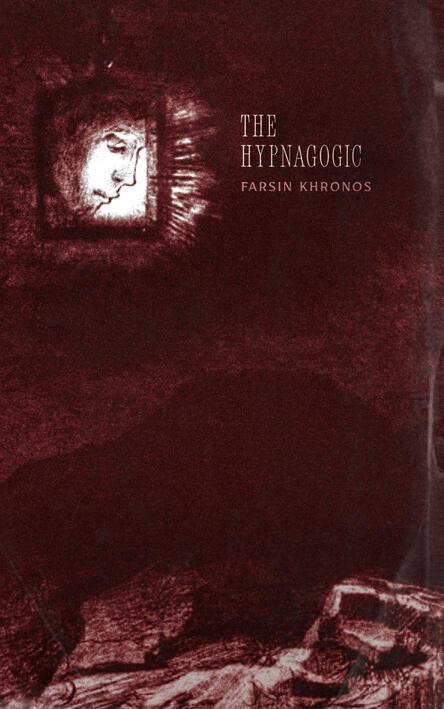
The Hypnagogic (a chapbook)
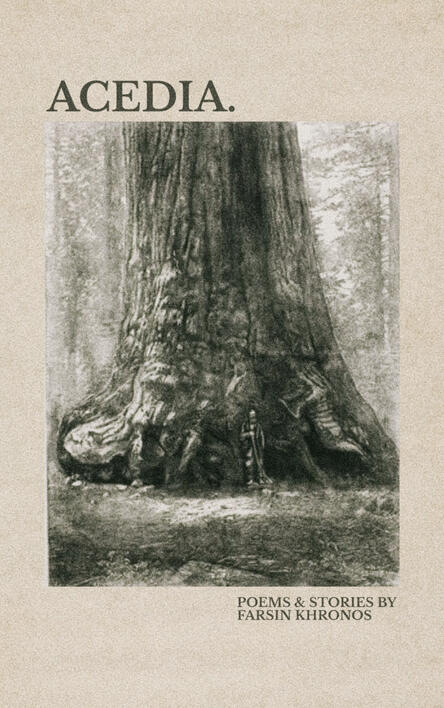
ACEDIA. (Poems & Stories)
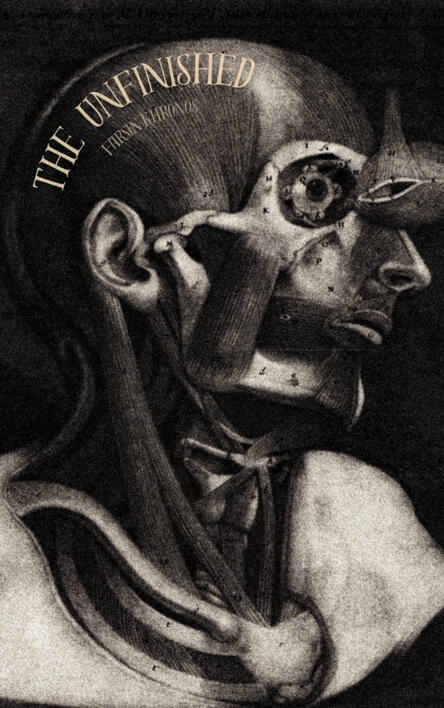
The Unfinished (A Novel In Progress)
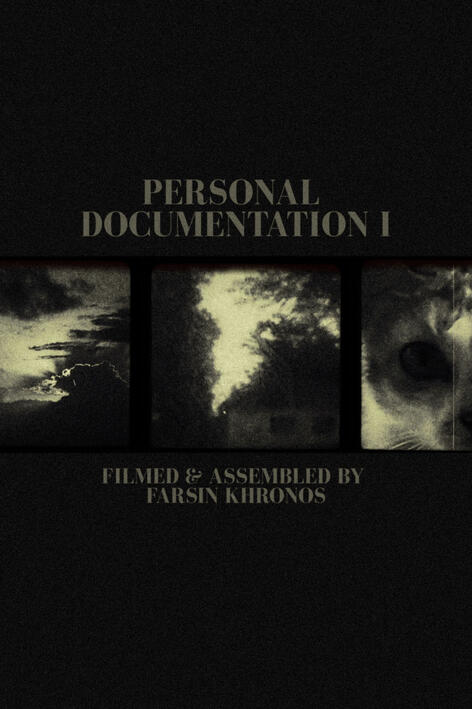
PERSONAL DOCUMENTATION I (Short Film)
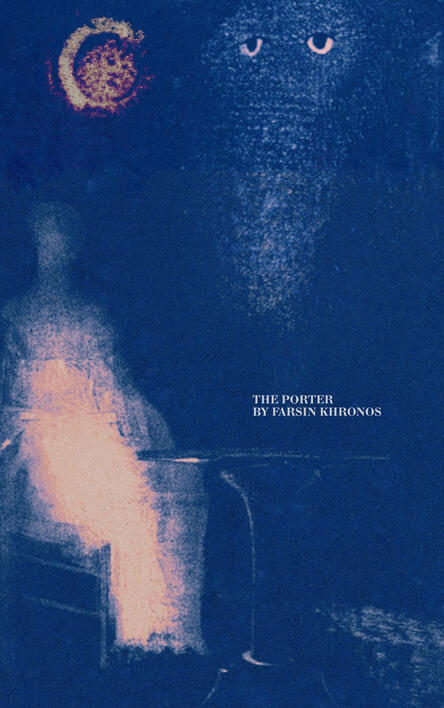
THE PORTER (A Novel in progress)
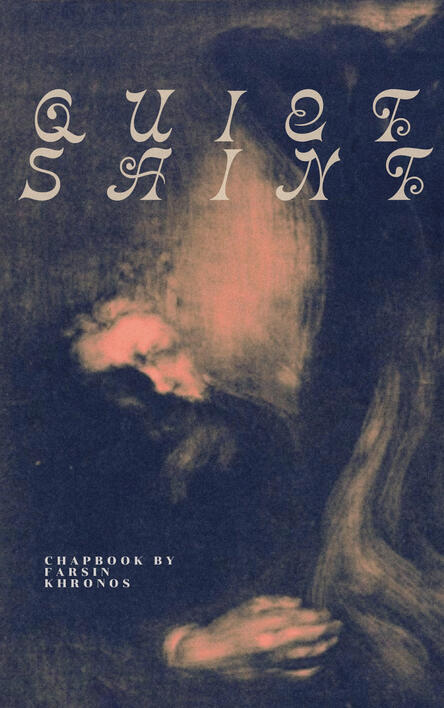
QUIET SAINT (A Chapbook in progress)


The Black Grouse

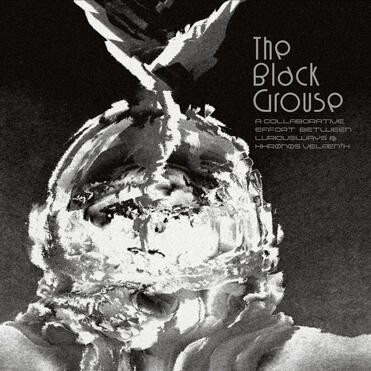
A civilless society is cursed with a blackout for one night, a darkness greater than anything a population of billions has ever known, and now, blind within it, people wander into whatever their hearts have been quietly asking of them, stealing, loving, confessing, destroying, praying, becoming for a few fleeting hours the people they had hidden beneath the light, somewhere in the distance a black grouse calls into the darkness, and the night passes slowly, until at last morning begins to return, and no one knows what scene God himself will have to witness when the light comes back.I think one of the biggest pleasures for me this year was truly getting to make this project with my friend Lurn. I had collaborated with her on three previous projects, where I would send her samples and she would cook something unbelievable out of them. She has never failed to amaze me with her creativity. We had tried to make a project together so many times before, but a lot of them never really moved forward. I think I remember The Black Grouse being one of the projects I pitched to her as a massive blackout happening across the world for one night, and we wanted to capture it through a lot of industrial sound. I think I definitely kept that description somewhere in the back of my mind while I was working on this project. When I sent it to Lurn, she immediately, I think the very next day, came back with an entire tracklist and the name The Black Grouse, and I immediately fell in love with the name. It took us, I think, another three months before we actually started working on anything. Partially, I think, that was my fault. I didn't immediately let it take form, even though there was something here with a substantial potential that I don't think we had found in some of the projects we had started before. But once we finally sat down with it, everything happened almost at once. We started working on it and, for about a week, we were completely consumed by trying to bring this vision into a real form. Somehow, we made the entire thing in just one week. It is a messy project, but an incredible one, and I am just so proud of it.Furthermore, I want to talk about three of the tracks that I contributed the most to. First, I should introduce something we came up with called the 222 method. Since the album has six tracks, the idea was that for two tracks we would send samples to each other and then cook with those stems and demos, taking them somewhere entirely of our own and trying to bring a vision out of what the other person had given us. My contributions to these two tracks were Leather Hands and Salvation Army. Then, for the other two, we each took one track and worked on it entirely on our own, without using any samples from one another. My contribution to that was Anima Silva. Leather Hands was probably the most fun of the three for me to make, while Anima Silva was one of the most chaotic tracks I have ever worked on. I kept building on it and rebuilding it, and for most of the process I wasn't even sure how I felt about it. It wasn't until the very end, when everything somehow clicked into place, that I finally understood what I had been making. Salvation Army, though, was something I trusted almost immediately. Lurn gave me the chance to cook up a beautiful outro using her samples, and I immediately saw this vision of a battleground. With my flute, I put a flutist into that group and somehow made the vision I had in my head come true. It became a kind of farewell to the night, to all that chaos, as though the darkness had finally exhausted itself.I have always been an artist who works alone, and for a long time that worked perfectly well for me. I never really thought about how much fun it could be to take a vision that existed inside two different people and somehow make it become one thing. There is something very strange and beautiful about it. You give another person a piece of your imagination, they return it changed, and then you change it again, until eventually you can no longer tell where one person's idea ends and the other's begins. The Black Grouse made me want to be more open to collaboration in the future, not because I suddenly feel that I need someone else to make my work, but because I learned that sometimes another person can enter a world you thought belonged only to you and show you a door you didn't know was there. And I think that is perhaps what I am most grateful for with this project, for one week, we both walked through that door together, and somehow, when we came out, The Black Grouse was there.Credit
Produced By: LuriousWays & Farsin Khronos
Mixed By: LuriousWays & Farsin Khronos
Mastered By: LuriousWays & Farsin KhronosTracklist
1. LURIOUSWAYS & KHRØNØS VELÆN†H — BIOCHEMICAL DREAD — 06:03
2. KHRØNØS VELÆN†H & LURIOUSWAYS — LEATHER HANDS — 05:40
3. KHRØNØS VELÆN†H — ANIMA SILVA — 17:12
4. LURIOUSWAYS — STORM OF REBELLION — 08:18
5. LURIOUSWAYS & KHRØNØS VELÆN†H — TANZEN AUF DEM DRAHTSEIL — 06:44
6. KHRØNØS VELÆN†H & LURIOUSWAYS — SALVATION ARMY, THE MATCHBOX BAND & FLUTE SONATA — 16:03TOTAL LENGTH — 60:00Record Released Under Pratumscúan MMXXVI & Hate Hurts You MMXXVI
CD
€13.40
zeitmessung

“threefold is the pace of time: slowly the future comes toward us, swiftly the present flies away, eternally still stands the past.”
— friedrich schiller, spruch des confucius (1795)zeitmessung (time measurement) is the second album of morgenlicht, following høuse øf hørøløgue and returning to a much earlier part of aldebrand morgenlicht's life. this is the dream of a young clockmaker. before the house, before the years had accumulated into memory, there was only the fascination with the mechanism. aldebrand is learning how to make clocks, and with everything he learns, the world seems to become larger. i think i have always known how i wanted to continue aldebrand's story, but when i finally sat down to make the music, i realized how much the haunting world of høuse øf hørøløgue had followed me. it became difficult to imagine aldebrand somewhere else, in another landscape, before the house, but i think i also had to accept where aldebrand's story will eventually end, and what everything he has built will come to: his inevitable death, and the solitude he will eventually find within time. how much of time can actually be measured? is it even possible to measure time at all? what is time, really, and why are we so completely bound to it? and why has aldebrand chosen to find his solitude there? i think høuse øf hørøløgue has haunted me throughout the making of this record. i tried, at first, to imagine aldebrand outside of that world, to imagine him somewhere open and young and hopeful, before everything that would eventually happen to him. but i slowly realized that i could never completely separate him from the end of his story, even when i am writing about a much younger aldebrand. it follows him into every landscape i place him in. and perhaps i had to accept that i am bound to that ending too.as the person creating aldebrand, i cannot simply forget what i have already written about him, just as aldebrand cannot escape the time that carries him toward his own end. i don't think it is possible to ignore time. i don't think it is possible to ignore the past. everything we make carries what came before it, whether we want it to or not. maybe that is what this landscape of zeitmessung really is. it is not a place untouched by the future, but a place haunted by it. aldebrand is young here. he is still learning. he is still dreaming. he has no idea what this fascination with clocks will eventually become, or where it will take him. but i know. and perhaps that is why there is something so bleak and nostalgic about this first glimpse into his youth. i am looking at him before he knows himself, while knowing exactly where he will end. there is something almost cruel about making a young man dream when you already know how his dream will end. but perhaps that is what time is: the strange distance between who we were, who we are, and the person we will inevitably become. and so i stopped trying to escape høuse øf hørøløgue. i let it haunt this record. i let the past remain present. zeitmessung became less about imagining a world before everything else and more about accepting that there is no world before everything else. there is only time, carrying everything with it. aldebrand is learning to measure time. i am learning that i cannot escape it.tracklist:
introit — the clockmaker’s dream i
apprenticeship
eisenach, 19—
unfinished clocks
the last mechanism
exitus — the clockmaker’s dream iicredits:
produced, written, mixed & mastered by farsin khronos
mixed & mastered with kazmir drechno
released under pratumscúan • mmxxvii
Historia Morbi
Historia Morbi (History of the Illness) is kinda the weirdest thing I’ve got to make at this point. I don’t think of myself as considering this another music project of mine. I think it feels more like a documentation of the psychiatric treatment I’ve been receiving since I was just about 12. It all started because I could not accept the idea of death, so I decided to just hide in my room. When I look back at everything I’ve been through, when I look back at this, it appears in a muddled form. I can’t even recognise myself, and I wanted to capture the form everything was inside my head. To do that, I built two characters: one, Falkner Hartmann, a German man from the 1930s living with relentless panic attacks, sleeplessness, and a mind that has become unbearable to inhabit. And his psychiatrist, Dr. Viktor Reichenau, whom I see as a father figure to Hartmann, who, within everything he’s got, wants Hartmann to get better. I wanted to reflect what I know about myself, what I have learned, and how I have changed, all through this character and his psychiatrist.After years of failed treatments and growing isolation, and needing to become someone else than himself, after seeing there’s no way out, he volunteers to undergo the experimental procedure Reichenau suggests, known as the Moniz Method. In a way, I felt the need to end it in a tragedy, ultimately with Hartmann dying during the procedure. I think the long-standing reason for me building so many characters through my work, only for them to die, is in a way my way of somehow coming to terms with how afraid I am of the idea of death and how much it has haunted me. That’s one of the biggest things I also wanted to explore here, but maybe through a different lens than ever before. Hartmann is just another character who was born for me to, in a way, accept death. So he simply dies at the end. But I also felt the need to bring myself into the album’s thesis at the end, as myself, as Farsin Khronos, not as any of my characters. Even if I didn’t have anything to say that hadn’t already been said by Hartmann or Reichenau, I wanted to be there with this character in this tragedy. So I’m there. It’s been a while since I felt this freeing and also sad making a project of mine. This, in every way, feels just so special to me, and I think this is going to be a project I will always keep close to my heart.Tracklist
1. Notes from Dr. Viktor Reichenau — 00:39
2. Hartmann: Intake — 10:37
3. Reichenau: Case History I — 02:47
4. Reichenau: Case History II — 03:35
5. Hartmann: The Moniz Method — 07:40
6. Note from Falkner Hartmann — 03:45
7. Reichenau: Wake Up — 01:50
8. Note from Farsin Khronos — 01:20
inylProduced by: Farsin Khronos
Written by: Farsin Khronos
Mixed by: Farsin Khronos & Kazmir Drechno
Mastered by: Farsin Khronos & Kazmir Drechno
Record Released Under Pratumscúan
Release date: October 1 2026
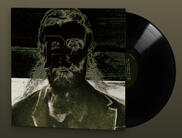
12" vinyl — €32.90
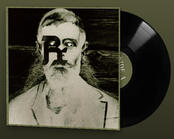
12" vinyl + booklet — €38.40
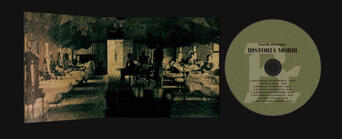
cd + booklet — €14.90